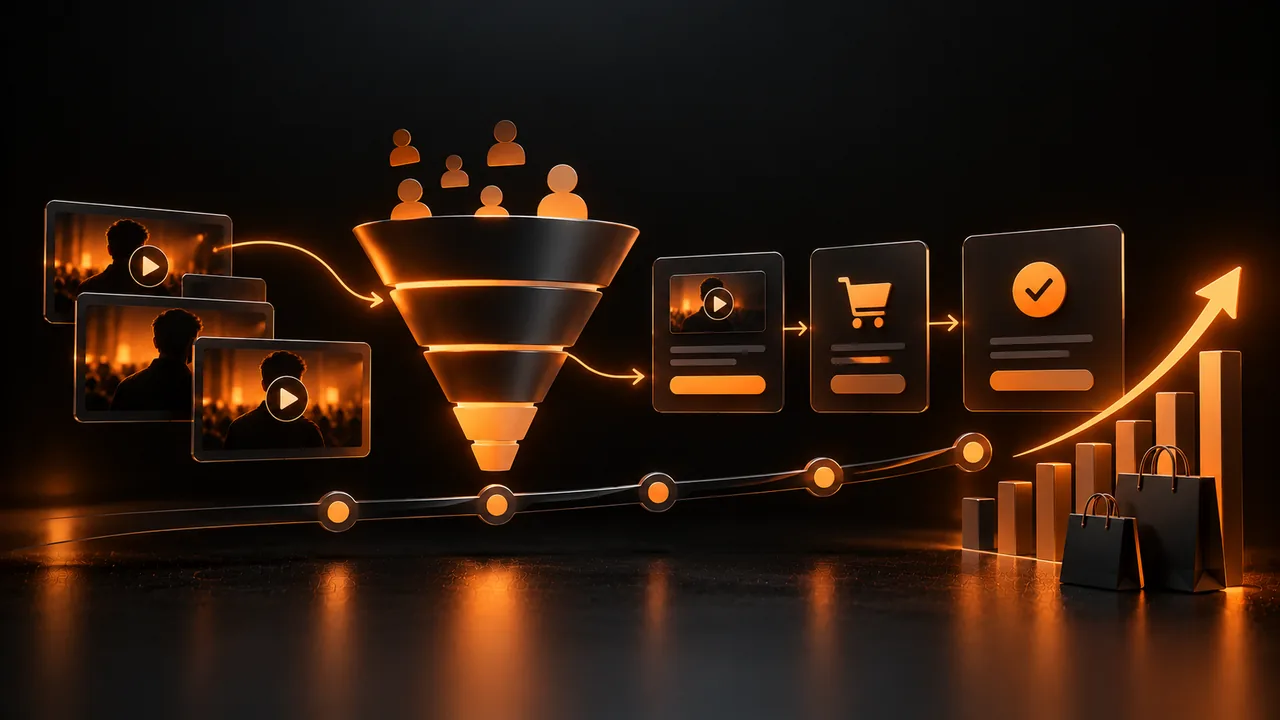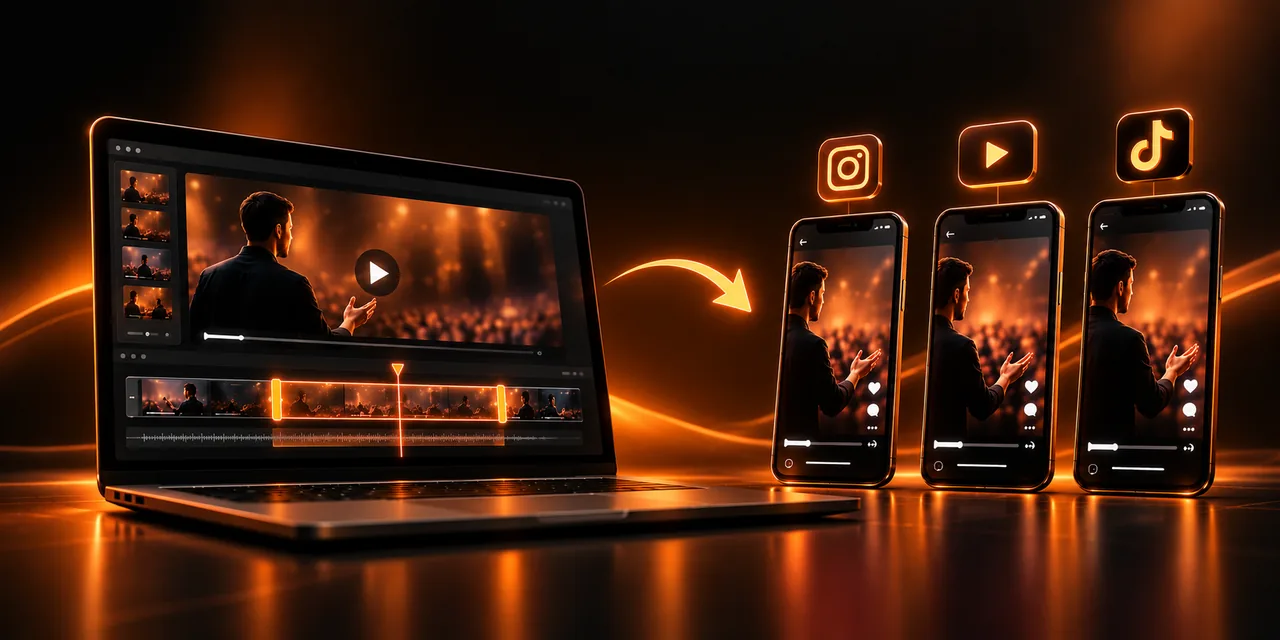
Your best-converting VSL took months to get right: the hook, the story, the offer, the timing of every button. Expanding into a new language used to mean starting over with a new presenter, a new recording and a new round of testing. AI dubbing for sales videos changes the cost of that decision. You can now translate a VSL into several languages in days, in the original presenter's voice, and test whether it sells before investing in a full local production.
For practical guidance on video A/B testing, read the dedicated guide.
The catch is that a translated video is not automatically a converting video. Tool pages explain how dubbing works; few explain how to protect conversions. This guide covers when to dub versus subtitle, how to translate a VSL so it still sells, how to build a multilingual video landing page and how to test AI video translation for marketing against your original.
What is AI dubbing for sales videos?
AI dubbing uses speech recognition, machine translation and synthetic voice to replace the spoken audio of a video with a version in another language. Modern tools can produce a voice that sounds close to the original speaker, keep the timing of the original speech and, in some cases, adjust lip movements to match.
For sales videos, the goal is different from entertainment dubbing. You are not just making the content understandable; you are trying to preserve persuasion: the rhythm of the hook, the emotional beats, the confidence of the offer and the exact moment the call to action appears.
Dubbing vs subtitles: which converts better?
There is no universal winner. It depends on the market, the audience and the video. Consider:
Dubbing tends to help when:
The audience expects dubbed content (common in markets such as Germany, France, Italy, Spain and Brazil).
Most viewers watch on mobile, where reading subtitles while watching is harder.
The VSL relies on emotion and tone that subtitles cannot carry.
Subtitles tend to help when:
The audience is used to subtitled content.
The presenter's original voice is a key part of the brand.
Many viewers watch without sound. Our guide on subtitles and silent viewing explains why captions matter even in the original language.
The right answer comes from testing. AtomicPlayer lets you A/B test dubs vs subtitles as variants, so you can compare revenue per play in each market instead of guessing.
How to translate a VSL without losing conversions
Step 1: Pick the right market
Choose markets where you can actually deliver: payment methods, support, legal requirements and, if needed, product localisation. Check search and ad data to confirm demand.
Step 2: Clean up the source script
AI translation follows your script. Before you translate a VSL:
Remove idioms and wordplay that will not travel.
Replace local references (holidays, sports, prices) with neutral or adaptable ones.
Make sure the offer, price and guarantee are correct for the new market.
Step 3: Translate, then localise
Machine translation gets the meaning; a native speaker makes it persuasive. Have a native marketer review:
The hook: does it still stop the scroll?
Claims: are they accurate and compliant locally?
The offer: currency, pricing format and payment options.
Tone: formal or informal address, cultural fit.
Step 4: Generate the dub
Generate the AI dub using the reviewed script. Listen to the entire video, especially the opening, the transitions into the pitch and the offer itself, as these sections drive conversions.
Step 5: Re-time the CTAs
Translated speech is often longer or shorter than the original. Spanish and German, for example, often run longer than English. Check that the CTA, pitch reveal and any timed elements still appear at the right moment in each language version.
Step 6: Test before scaling
Launch the dubbed version with a modest budget, compare it against a subtitled version and measure hook retention, pitch retention and revenue per play.
Building a multilingual video landing page
A dubbed VSL needs a page that speaks the same language. A multilingual video landing page should include:
A localised headline that matches the dubbed hook.
The right language version of the video for each viewer, ideally served automatically.
Localised captions as a fallback for muted viewing.
Local currency and payment methods at checkout.
Translated testimonials, FAQ and guarantee.
Separate URLs per language (for example /es/ or /de/) with hreflang tags, so search engines show the right version.
AtomicPlayer's AI dubs serve the right language version to each viewer, and its automatic captions can be translated into 10 languages, so a single multilingual video landing page can handle several audiences.
Which parts of a VSL are hardest to translate?
When teams translate VSL scripts, a few sections cause most of the conversion loss. Give these extra review time:
The hook. Hooks often rely on wordplay, rhythm or a culturally specific reference. A literal translation can lose all of its punch. Ask a native speaker to rewrite the hook rather than translate it.
Numbers and prices. Currency symbols, number formats and price psychology differ by market. A price ending in .97 may feel natural in one market and odd in another.
Testimonials. Translated testimonials should stay faithful to what the customer actually said. Avoid improving them in translation.
Claims. Health, income and performance claims are regulated differently in each country. What is acceptable in one market may not be in another.
The close. The final call to action needs a natural, confident tone. Machine translations often sound hesitant or overly formal here.
AI dubbing for sales videos handles the voice; your team still has to own the message.
Translate VSL content beyond the video
A translated video is only part of the funnel. To translate VSL funnels fully, also localise:
Ad copy and headlines that send traffic to the video
The landing page headline, offer summary, FAQ and guarantee
Checkout pages, order bumps and upsell videos
Confirmation emails and onboarding sequences
Support replies and help articles
Buyers notice when the video speaks their language but the checkout does not. Consistency across the funnel is what turns AI video translation for marketing from a novelty into a revenue channel.
Measuring AI video translation for marketing
Track each language version as its own funnel:
Play rate – does the localised headline and thumbnail earn the play?
Hook retention – does the dubbed opening hold attention as well as the original?
Pitch retention – does the translated story keep people to the offer?
CTA click-through and conversion rate.
Revenue per play in local currency, converted for comparison.
Refund rate – a high refund rate may signal mistranslated promises.
If a dubbed version shows a sudden cliff that the original does not have, replay that second. It is often a mistranslation, an awkward voice moment or a cultural reference that did not land.
When AI dubbing for sales videos is not the right choice
AI dubbing for sales videos is a strong tool, but it is not always the best one. Consider a different approach when:
The offer depends heavily on local credibility. In some high-ticket or regulated markets, a native presenter recorded locally may build more trust than a dubbed foreign expert.
The video relies on on-screen text. If key arguments appear as text in the video, you will also need to localise graphics, not only the audio.
The presenter's accent or personality is the brand. Subtitles may preserve more of what makes the original work.
You cannot support the market after the sale. Translating the VSL is pointless if customers cannot get help in their language.
In these cases, start with subtitles and a translated landing page, measure demand and invest in AI dubbing or a native re-shoot once the market proves itself.
Example rollout plan for a translated VSL
A practical 30-day rollout for AI dubbing for sales videos might look like this:
Week 1: choose one new market, clean the script, translate and review with a native marketer.
Week 2: generate the dub and captions, re-time CTAs and build the multilingual video landing page for that language.
Week 3: launch with a modest ad budget and run the dub vs subtitle test.
Week 4: review hook retention, pitch retention and revenue per play against the original language, fix any cliffs and decide whether to scale or try the next market.
Repeat this cycle for each new language instead of launching ten at once. It keeps quality high and lets each market's data guide the next.
Compliance: label AI-generated voices
Synthetic voice is powerful, so use it responsibly.
Explore the AI video copilot to turn your video performance data into ideas for hooks, scripts and tests.
EU AI Act. The EU AI Act's transparency rules (Article 50) apply from 2 August 2026. They include duties to disclose AI-generated or manipulated audio and video that could appear authentic. If you dub a real presenter's voice for EU audiences, plan to disclose it clearly, for example with a short on-screen or on-page note. Check with a legal adviser for your specific case.
Consent. Only clone or synthesise the voice of a presenter who has agreed to it in writing.
Accuracy. Make sure translated claims, results and guarantees are true and allowed in each market.
Platform rules. Ad platforms may have their own policies on AI-generated content and disclosures.
Transparency rarely hurts conversions when it is handled simply ("This video has been dubbed using AI"), and it protects trust.
AI dubbing for sales videos: a launch checklist
Market chosen with payments and support ready
Source script cleaned of idioms and local references
Translation reviewed by a native marketer
AI dub generated and reviewed in full
CTA and pitch timings checked per language
Multilingual video landing page with localised headline, currency and hreflang
Dub vs subtitle A/B test configured
AI disclosure added where required
Multi-language AI workflows are on AtomicPlayer's Scale plan; see pricing for what that plan includes.
Frequently asked questions
Can I dub only part of my VSL and keep the rest with subtitles?
Technically yes, but switching between voice and subtitles mid-video usually feels jarring. A better approach is to dub the full video and offer captions alongside it, or test a fully dubbed version against a fully subtitled version.
How long does it take to translate a VSL with AI?
Generating the dub itself is fast; the time-consuming parts are script review, native-speaker localisation and checking timings. Plan for a few days per language for a careful launch rather than publishing the raw machine output.
Do I need a separate ad account or campaign for each language?
You do not always need a separate account, but separate campaigns or ad sets per language make reporting and budget control much easier. Match each ad's language to the dubbed VSL and multilingual landing page it links to.
Will AI-dubbed videos rank in search engines in other languages?
The audio itself is not what search engines read. To be found in another language, publish a localised page with a translated title, description and transcript, and use hreflang tags and video structured data so search engines understand each language version.
What if viewers in one country speak several languages?
Let viewers choose. Serve a default based on browser language or location, and include a visible language switcher in the player or on the page so viewers can change to the version they prefer.
If you read nothing else
- Technically yes, but switching between voice and subtitles mid-video usually feels jarring. A better approach is to dub the full video and offer captions alongside it, or test a fully dubbed version against a fully subtitled version.
- Generating the dub itself is fast; the time-consuming parts are script review, native-speaker localisation and checking timings. Plan for a few days per language for a careful launch rather than publishing the raw machine output.
- You do not always need a separate account, but separate campaigns or ad sets per language make reporting and budget control much easier. Match each ad's language to the dubbed VSL and multilingual landing page it links to.
- The audio itself is not what search engines read. To be found in another language, publish a localised page with a translated title, description and transcript, and use hreflang tags and video structured data so search engines understand each language version.
Atomicat Team
The team behind AtomicPlayer — writing about video conversion, retention, and the infrastructure that makes both measurable.