If your Meta campaigns started behaving differently over the past year, with broad audiences beating detailed targeting and fresh creatives outperforming polished old winners, you have felt the effect of Andromeda. Meta's newer ad retrieval system changes which ads get a chance to be shown, and it rewards variety in creative. For anyone running Meta Andromeda video ads into a video sales letter, that means one thing: you need more hooks, faster, without re-shooting your VSL every week.
Most articles about Andromeda focus on the ads alone. This guide connects the ad to what happens after the click. We cover what Andromeda changed, an Andromeda creative strategy built for VSL funnels, a practical system for facebook ad hook testing using footage you already have and how to measure each hook by what viewers do inside the video.
What is Meta Andromeda?
Andromeda is the name Meta gave to its next-generation ad retrieval engine, first described publicly in late 2024. Retrieval is the early stage of ad delivery, where the system narrows millions of possible ads down to a shortlist that could be shown to a specific person. A ranking stage then picks the winner from that shortlist.
Andromeda uses larger machine-learning models and more computing power at this retrieval stage, so it can consider more ads and understand them in more detail. For advertisers, the practical effects that marketers widely report include:
Creative acts as targeting. The system uses the content of the ad itself to decide who might respond, so different creatives reach different people even with the same broad audience.
Similar ads compete with each other. Ads that look and sound nearly identical tend to be treated as variations of the same idea, limiting the reach each one gets.
Diversity is rewarded. Accounts that supply genuinely different concepts, formats and angles give the system more options to match to different people.
Why Meta Andromeda video ads change the game for VSL funnels
VSL funnels have traditionally relied on a few long-running winning ads and one main VSL. Under Andromeda that model struggles:
A single winning ad fatigues faster when the system wants new concepts.
Ten nearly identical edits of the same ad may be treated as one idea.
Broad targeting means the ad hook decides who clicks, so the people arriving at the VSL vary more by ad.
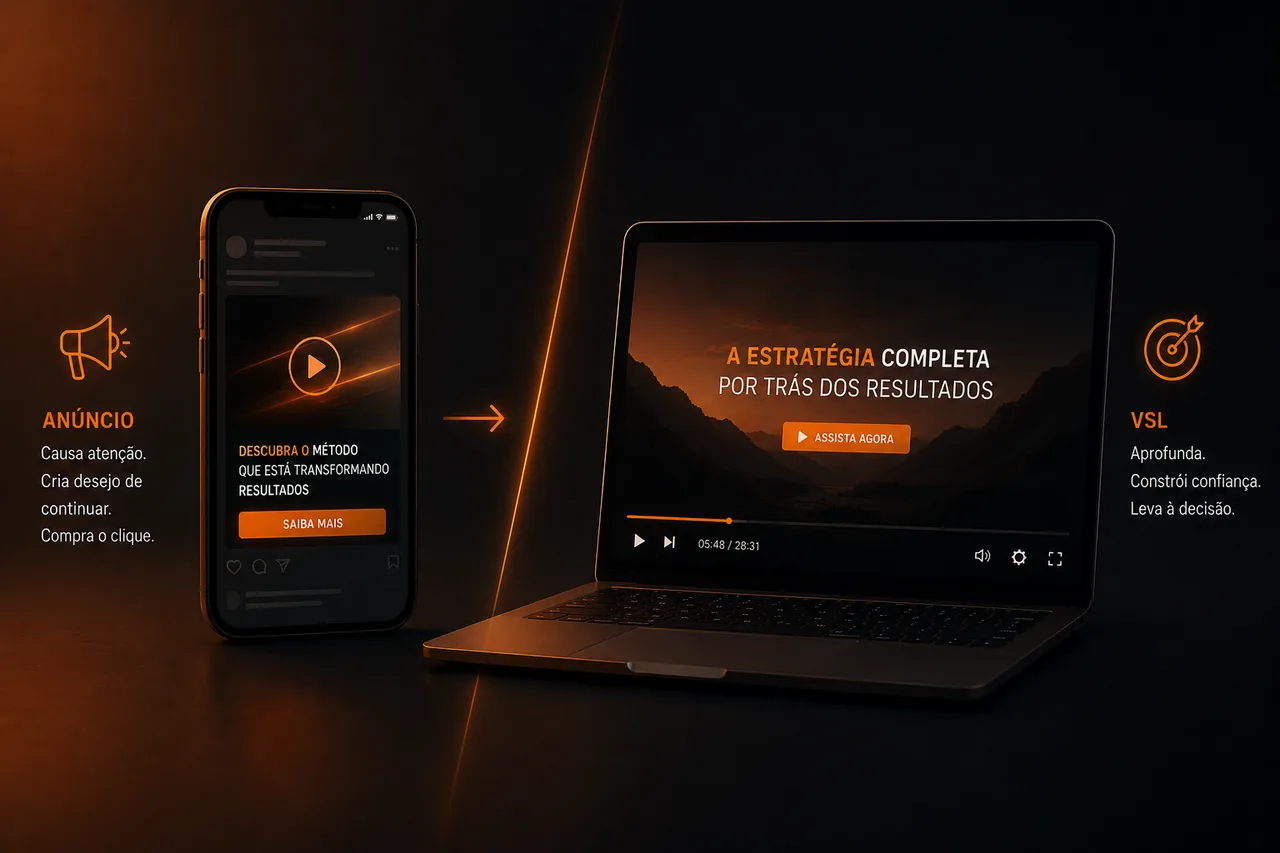
That last point is the one most media buyers miss. With Meta Andromeda video ads, each hook brings a slightly different audience to the same VSL. If the VSL opening does not continue the promise of the hook, retention drops in the first 15 seconds and the click is wasted. Our guide on why the same video does not work for ads and sales pages explains the mismatch in detail.
For practical guidance on Meta Conversions API video events, read the dedicated guide.
An Andromeda creative strategy for VSL funnels
A strong Andromeda creative strategy for VSLs has three layers.
Layer 1: different concepts, not just different edits
Build hooks around genuinely different angles:
Problem angle: call out the pain directly.
Outcome angle: show the result.
Story angle: open with a personal moment.
Proof angle: lead with a testimonial or case study.
Contrarian angle: challenge a common belief.
Mechanism angle: name the unique method.
Offer angle: lead with the deal or guarantee.
Each concept should look and sound different in the first three seconds: different visuals, different first line, different person on screen if possible.
Layer 2: multiple formats per concept
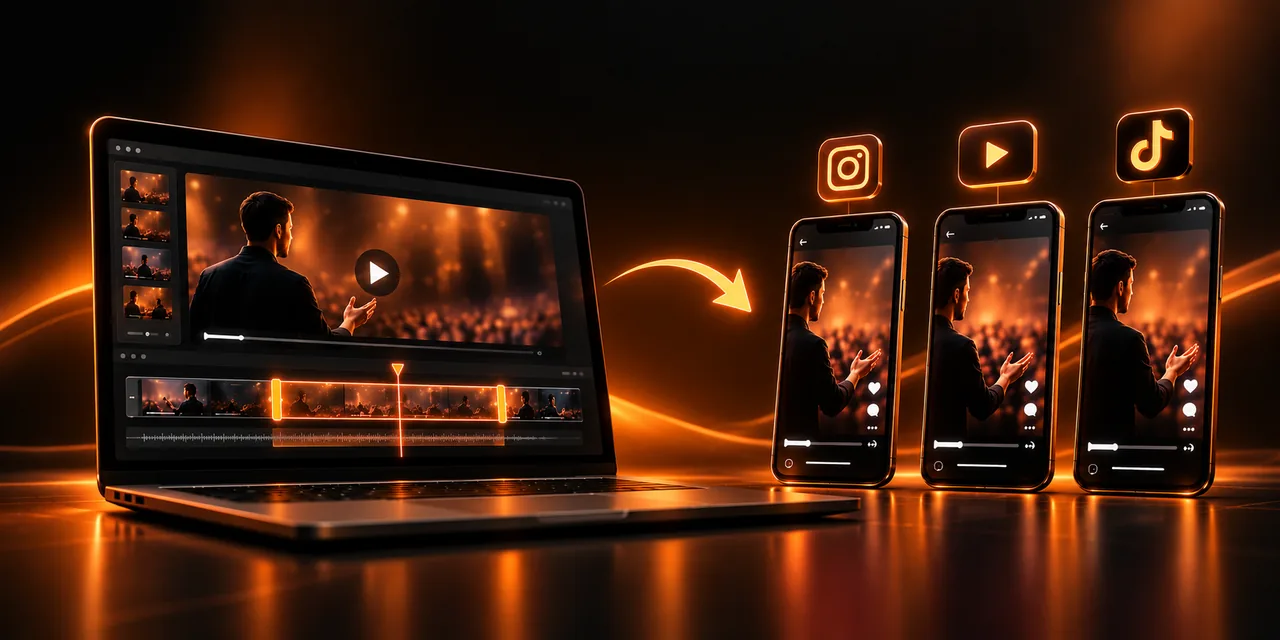
For each concept, produce more than one format: a talking-head cut, a b-roll cut with captions, a vertical 9:16 version for Reels and Stories, and a square or 4:5 version for feeds. You can create vertical cuts from your existing VSL; see our guide to turning a VSL into Reels and Shorts.
Layer 3: a matching VSL opening for each concept
This is where VSL ads differ from ecommerce ads. Each ad concept should lead into a VSL opening that continues its promise. You do not need a new VSL per ad: you need a few short opening segments that can be swapped in front of the same main video.
Facebook ad hook testing without re-recording
You can test 10 ad hooks using footage you already have. Here is the system.
Mine your VSL for hook moments. Review the full VSL transcript and mark ten lines that could stop a scroll: a bold claim, a surprising number, a question, a story beat, a testimonial.
Cut each moment into a 15–30 second ad. Add captions and a clear first frame.
Group them by concept so each concept is distinct for Andromeda.
Create two or three alternate VSL openings that match the strongest concepts. Record only these short segments, not the full video.
Launch the ads in a broad campaign with enough budget for each concept to gather data.
Send each concept to its matching VSL opening using separate landing page URLs or URL parameters.
Measure hooks by what happens inside the VSL, not just in Ads Manager.
This approach to facebook ad hook testing gives Andromeda the creative diversity it needs while keeping production lean.
Measuring VSL ads beyond click-through rate
Ads Manager shows hook rate (three-second views), click-through rate and cost per click. Those numbers tell you which ad gets attention. They do not tell you which ad brings buyers. For VSL ads, add these post-click metrics:
Play rate by ad: did visitors from this ad start the video?
Hook retention by ad: how many stayed past the first 15–30 seconds?
Pitch retention by ad: how many reached the offer?
Revenue per play by ad: what did each viewer from this ad generate?
AtomicPlayer shows retention by traffic source and lets you compare cohorts by campaign. You can also A/B test VSL openings (hooks) directly in the player with automatic winner promotion, and use Mini-Hooks, image or GIF pattern interrupts placed at drop-off points, to hold attention where the curve dips. See the first 15 seconds of a VSL for patterns that work.
10 hook ideas you can cut from an existing VSL
Use these ten hook types as a checklist when you mine your VSL for Meta Andromeda video ads. Each one is a distinct concept, which is exactly what an Andromeda creative strategy needs:
The bold result: the most impressive outcome from your story or a customer story.
The question: a question your audience asks themselves every day.
The mistake: "The biggest mistake I see [audience] make is…"
The myth: a common belief your method contradicts.
The moment: the turning point in your personal story.
The proof: a short testimonial clip.
The number: a specific, verifiable figure from your content.
The demonstration: a visual of the method or product in action.
The objection: answer the reason people usually say no.
The offer: lead with the guarantee, bonus or deadline (only if it is real).
Each of these can become a 15–30 second VSL ad with captions. Because they rely on different ideas, visuals and first lines, they give Andromeda real variety rather than ten versions of the same ad.
Matching ad hooks to VSL openings
Facebook ad hook testing only pays off if the click lands in the right place. Map each hook type to a matching VSL opening:
Result, proof and number hooks lead into an opening that immediately explains how that result was achieved.
Question, mistake and myth hooks lead into an opening that answers the question or explains the mistake.
Moment hooks lead into the story section of the VSL.
Offer hooks lead into a shorter VSL that reaches the offer sooner.
Three or four alternate openings are usually enough to cover all ten hooks. Record them once, test them inside the player and keep the winners for future VSL ads.
A weekly testing rhythm for Meta Andromeda video ads
Monday: review revenue per play by ad concept from the previous week.
Tuesday: pause concepts with weak pitch retention, even if click-through rate looks good.
Wednesday: cut three to five new hooks from the VSL around the winning concept and one new concept.
Thursday: launch the new VSL ads.
Friday: check that each new ad leads to the correct VSL opening and that tracking works.
This rhythm keeps fresh creative flowing, which Andromeda tends to reward, without exhausting your production team.
Budget and campaign structure for Meta Andromeda video ads
Creative is only half of the system; structure decides whether Andromeda can use it. A simple setup that suits most VSL funnels:
Review the Meta Conversions API integration to send video conversion events from your server.
Fewer, larger campaigns. Consolidate Meta Andromeda video ads into a small number of campaigns so each has enough budget and conversions to learn.
Broad audiences by default. Let the creative find the audience, with exclusions for existing buyers.
Several distinct concepts per ad set. Group your VSL ads by concept so you can see which ideas earn delivery.
A separate testing campaign. Launch new hooks in a testing campaign, then move proven winners into the main campaign.
Optimise for purchases when volume allows. If purchases are too few, use a deeper funnel event such as a pitch-reached video event as an interim signal.
This structure keeps facebook ad hook testing clean: new ideas get a fair chance without disrupting the campaigns that already pay the bills.
How Meta Andromeda video ads affect your VSL itself
Andromeda does not only change your ads. Because different hooks bring different people, your VSL now has to work for a wider mix of viewers. Watch for these signs in your retention data:
A steeper early drop for one traffic cohort suggests a hook-to-opening mismatch for that ad.
Lower pitch retention overall may mean broad targeting is bringing earlier-stage buyers who need more education before the offer.
Higher revenue per play from one concept tells you which angle to feature more prominently in the VSL itself.
Your Andromeda creative strategy and your VSL should evolve together. The ads tell you which angles attract buyers; the VSL data tells you which angles keep them watching to the offer.
Common mistakes with Andromeda creative strategy
Producing many near-identical edits and calling it testing
Judging hooks only on click-through rate
Sending every ad to the same VSL opening
Turning off broad campaigns too early, before the system has learned
Re-recording the entire VSL when only the opening needs to change
Frequently asked questions
Do I still need detailed interest targeting with Andromeda?
Many advertisers now rely mostly on broad targeting and let the creative do the targeting work, but results vary by account and offer. Test broad against your best interest audiences with the same creatives, and keep the option that delivers better cost per purchase.
How many ad concepts should a VSL campaign run at once?
Enough to give the system real variety without spreading budget too thin. Many teams start with three to five distinct concepts, each with a few format variations, and rotate in new concepts every week or two based on post-click results.
Can I reuse old winning ads under Andromeda?
Yes, but pair them with new, clearly different concepts. An old winner can keep performing, especially with fresh formats, but relying on it alone risks fatigue and limits how many different people the system can reach.
Should each ad hook have its own landing page?
Not necessarily a full new page. Often a separate URL or parameter that changes the headline and the first seconds of the VSL is enough to keep the promise of the ad consistent with the video opening.
How long should a hook test run before I decide?
Run it until each concept has enough clicks and plays to compare post-click metrics with confidence, usually several days at minimum. Decide on revenue per play or cost per purchase rather than early click-through rates.
If you read nothing else
- Many advertisers now rely mostly on broad targeting and let the creative do the targeting work, but results vary by account and offer. Test broad against your best interest audiences with the same creatives, and keep the option that delivers better cost per purchase.
- Enough to give the system real variety without spreading budget too thin. Many teams start with three to five distinct concepts, each with a few format variations, and rotate in new concepts every week or two based on post-click results.
- Yes, but pair them with new, clearly different concepts. An old winner can keep performing, especially with fresh formats, but relying on it alone risks fatigue and limits how many different people the system can reach.
- Not necessarily a full new page. Often a separate URL or parameter that changes the headline and the first seconds of the VSL is enough to keep the promise of the ad consistent with the video opening.
Atomicat Team
The team behind AtomicPlayer — writing about video conversion, retention, and the infrastructure that makes both measurable.