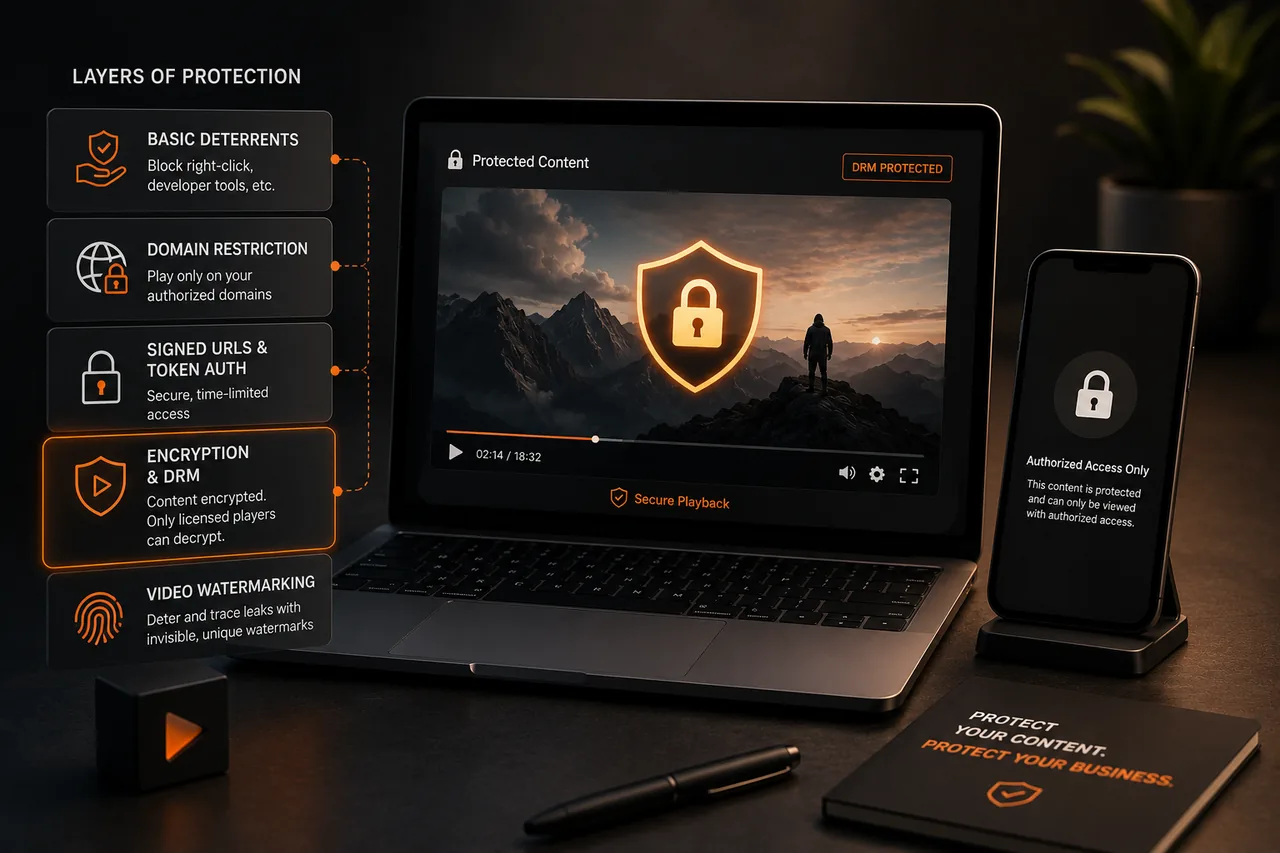
Video DRM protects paid content from copying. Video DRM is one layer of content protection, video watermarking traces leaks, and anti piracy video measures deter theft. This guide explains video DRM, content protection, video watermarking, and anti piracy video so your video DRM protects paid content.
What video DRM is
Video DRM controls how content can be accessed and copied, so video DRM is the core of content protection. Real video DRM encrypts the content so only licensed players decrypt it, which is stronger content protection than deterrents. Video watermarking is a different anti piracy video layer that traces leaks, and together video DRM, content protection, and video watermarking make anti piracy video work.
The distinction most explanations skip: real video DRM encrypts, while deterrents dressed as video DRM just block right-click. Both have a place in content protection, but calling a right-click blocker video DRM gives false security, so know which layer of anti piracy video you have.
The honest truth about content protection
No content protection is unbreakable, so video DRM is not perfect. Anything on a screen can be captured, so video DRM, content protection, and anti piracy video aim to raise the cost of piracy, not eliminate it. Video watermarking traces what video DRM cannot prevent, so content protection combines video DRM and video watermarking for anti piracy video. This reframes the goal: content protection proportionate to value, not perfect video DRM.
The layers of content protection
Basic deterrents: right-click blocking, the lightest anti piracy video layer, part of content protection but not real video DRM.
Domain restriction: the video plays only on your site, an effective content protection layer that stops lifting for anti piracy video.
Signed URLs and token auth: stronger content protection, so only authorised users access the stream, an anti piracy video layer that complements video DRM.
Encryption and true video DRM: the serious content protection layer, where video DRM encrypts and licensed players decrypt for anti piracy video.
Video watermarking: deters and traces; personalised video watermarking is strong anti piracy video, complementing video DRM and content protection.
Matching content protection to your content
Content protection is a spectrum, so match video DRM to value. Low-value content needs basic deterrents and domain restriction, not heavy video DRM. Mid-value content suits token auth and video watermarking as content protection. High-value content justifies true video DRM plus video watermarking for serious anti piracy video. The mistake in both directions is a mismatch: leaving valuable content with a right-click blocker, or burdening cheap content with heavy video DRM that hurts the content protection experience.
The trade-off with viewer experience
Content protection can hurt legitimate viewers, so video DRM must be invisible to them. Aggressive video DRM causes playback problems, so content protection should be strong where it matters and seamless for honest viewers. Token auth and domain restriction are seamless content protection, and video DRM via standard players is designed to play smoothly, so anti piracy video does not degrade the paid experience. Weigh how much video DRM costs the honest viewer, because content protection that harms them can cost more than piracy.
Frequently asked questions
What is video DRM? Video DRM controls how content is accessed and copied, usually by encrypting it so only licensed players decrypt. Real video DRM is stronger content protection than deterrents, and video watermarking is a separate anti piracy video layer.
Can content be made completely piracy-proof? No. Anything on a screen can be captured, so video DRM and content protection raise the cost of piracy rather than eliminate it, and video watermarking traces the anti piracy video leaks that happen.
What's the difference between DRM and anti-download measures? Anti-download deterrents block right-click without encrypting, so they are light content protection; true video DRM encrypts for real anti piracy video. A full content protection strategy layers both plus video watermarking.
Does video watermarking prevent piracy? Not directly. Video watermarking deters and traces, identifying who leaked a copy, so video watermarking complements video DRM and content protection for anti piracy video.
How much video DRM do I need? Match content protection to value: low-value needs deterrents, mid-value suits token auth and video watermarking, high-value justifies true video DRM. Avoid content protection that harms legitimate viewers.
The takeaway
Protecting paid video is real but works differently than the anxiety imagines. No video DRM is unbreakable, so content protection aims to make piracy inconvenient and traceable. That comes from layers: deterrents, domain restriction, token auth, true video DRM for content worth stealing, and video watermarking to trace leaks. Match video DRM to value, and keep content protection invisible to paying viewers. Strong where it matters, seamless for honest viewers, proportionate to the threat, that is what real video DRM and anti piracy video content protection look like.
If you read nothing else
- No content protection is unbreakable — aim to make piracy inconvenient and traceable.
- Real DRM encrypts; deterrents just block right-click — know which layer you have.
- Match protection to value: low-value needs deterrents, high-value justifies true DRM.
- Keep content protection invisible to paying viewers.
Atomicat Team
The team behind AtomicPlayer — writing about video conversion, retention, and the infrastructure that makes both measurable.